Which ad makes shoppers most likely to buy, and why?
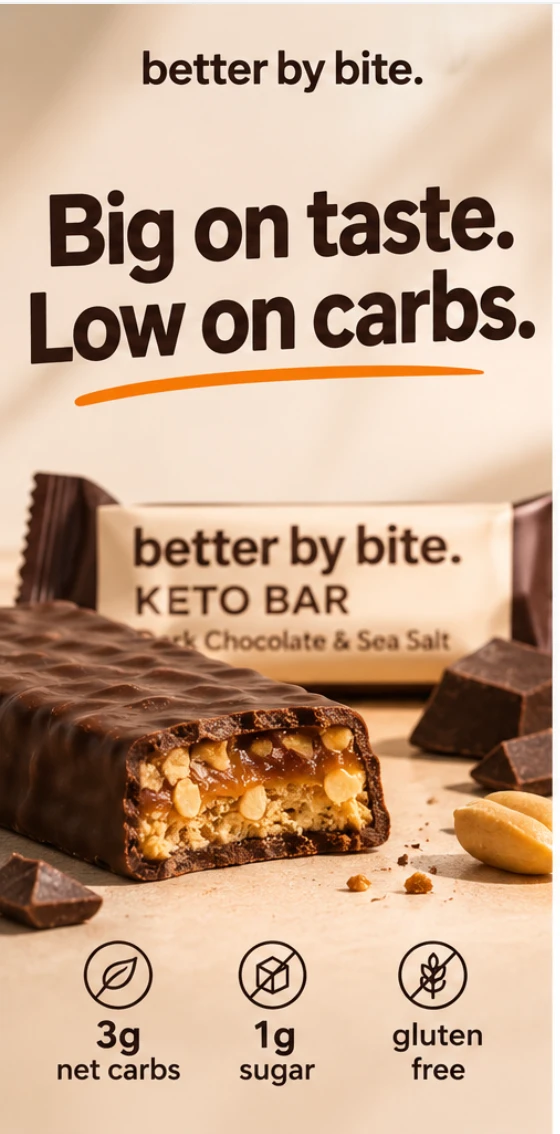
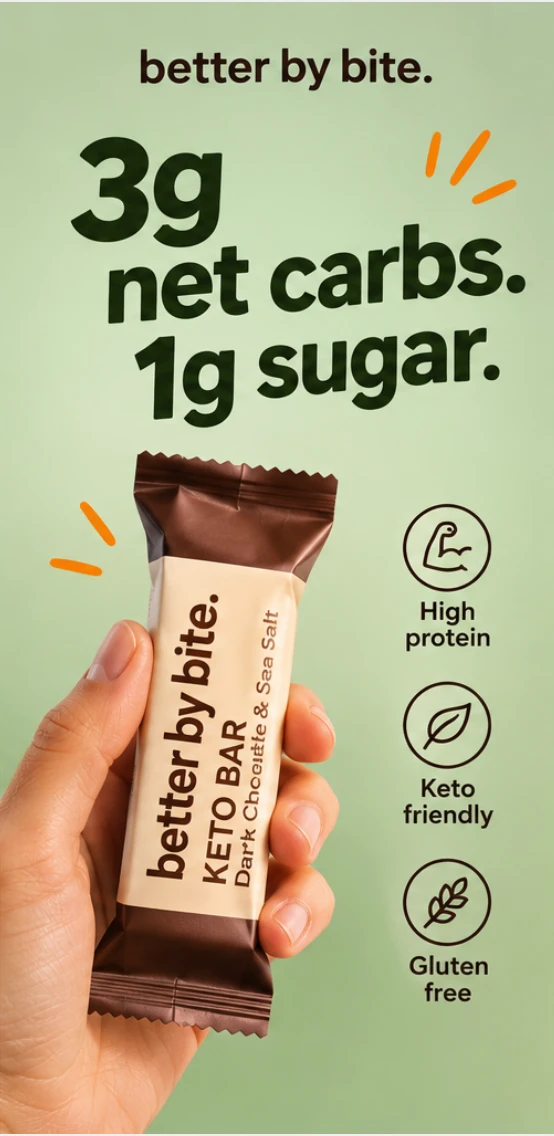
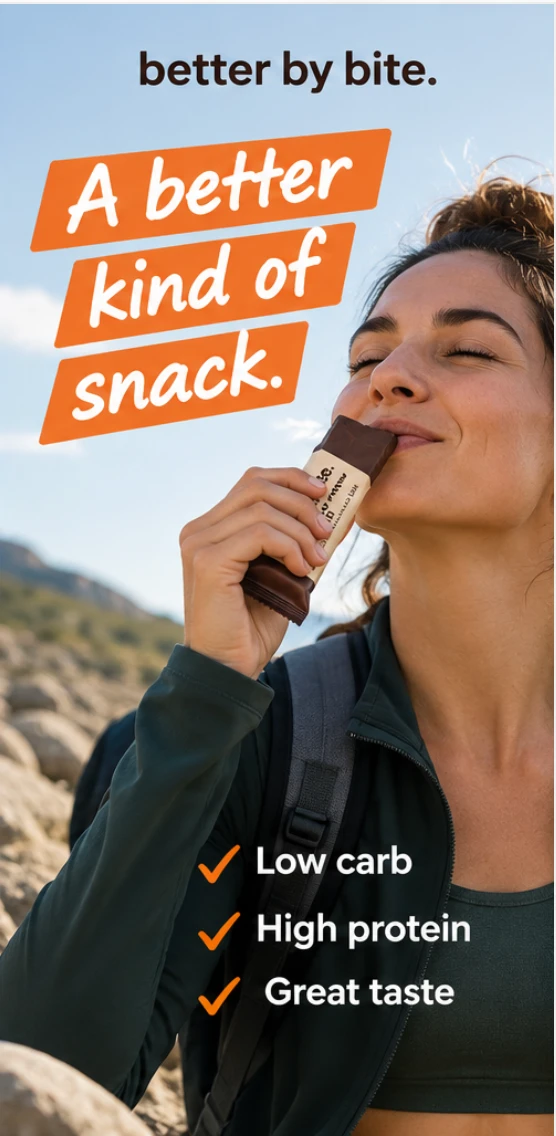
An ad and creative test for Better by Bite, a fictional keto snack-bar brand. 150 UK shoppers interested in low-carb eating each saw one of three ads (50 per creative), rated it, and explained what worked and what held them back.
The three ads tested
The short answer
Taste-led indulgence is the clear winner.
Ad A leads on buying intent (74% versus 52% and 38%). It makes the bar feel like a treat, while giving shoppers a concrete reason to try it.
Three key findings
Ad A leads on appeal (86%) and buying intent (74%).
Ad B earns the highest believability (80%).
Ad C offers a lifestyle angle, but has the lowest clarity (52%).
Question 01 · Ratings
How did each ad perform?
Each shopper rated one creative on five measures. Scores show the percentage rating 4 or 5 on a five-point scale.
| Creative | Buy intent | Appeal | Click | Clarity | Believ. |
|---|---|---|---|---|---|
| A / Taste-led | 74% | 86% | 68% | 88% | 76% |
| B / Nutrition | 52% | 64% | 58% | 84% | 80% |
| C / Lifestyle | 38% | 60% | 44% | 52% | 62% |
Question 02 · Appeal
What makes shoppers want to try it?
Shoppers rated how appealing the ad is, then described what they like most about the creative in an open-text question.
Question 03 · Barriers
What holds shoppers back?
Each shopper rated buying intent and explained any reservations. The chart shows low buying intent (ratings of 1 or 2), rather than rejection in a head-to-head choice.
Research-led implications
What does the evidence support?
Interpretations of this study, not predictions of live campaign performance.
Lead with Ad A for launch
Use the taste-led creative as the primary launch ad. It leads on buying intent (74%), appeal (86%) and clarity (88%), reinforcing the direction of the earlier tagline example.
Retain Ad B's concrete nutrition cues
Keep the 3g net carbs and 1g sugar figures visible in supporting copy. B earns the highest believability (80%), making it a useful secondary creative to trial.
Rework Ad C before spending behind it
Make the product more prominent and explain the low-carb benefit in the headline. The lifestyle execution has weaker clarity (52%) and buying intent (38%).
Audience differences
Stated buying intent by audience
| Creative | Regular keto (n=20/ad) | Other low-carb (n=30/ad) |
|---|---|---|
| A / Taste-led | 80% (16/20) | 70% (21/30) |
| B / Nutrition | 65% (13/20) | 43% (13/30) |
| C / Lifestyle | 45% (9/20) | 33% (10/30) |
A leads in both groups. B is closer among regular keto followers, suggesting a role for nutrition-led messaging in that audience. Small subgroup bases are directional only.
Method & limitations
Illustrative design: 150 UK snack-bar shoppers aged 18 to 55 interested in low-carb eating; 50 randomly assigned to each ad, with 20 regular keto followers and 30 other low-carb shoppers per group. Ratings use a 1 to 5 scale. All data and quotations are fictional; no panel was recruited and no fieldwork was conducted. Ads vary as whole executions, so individual elements cannot be isolated. Claims are fictional and would require substantiation before use. Stated intent is not observed behaviour.